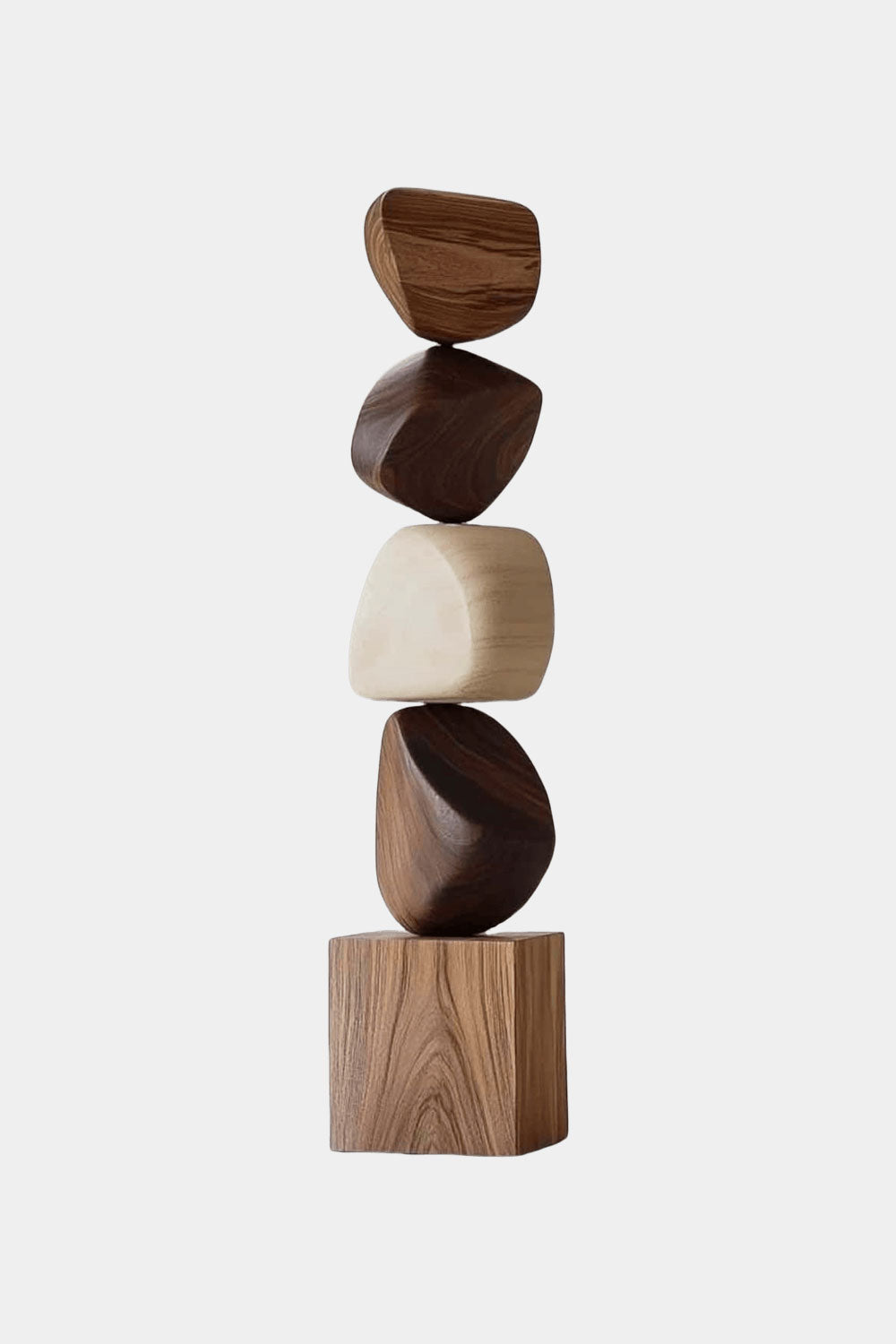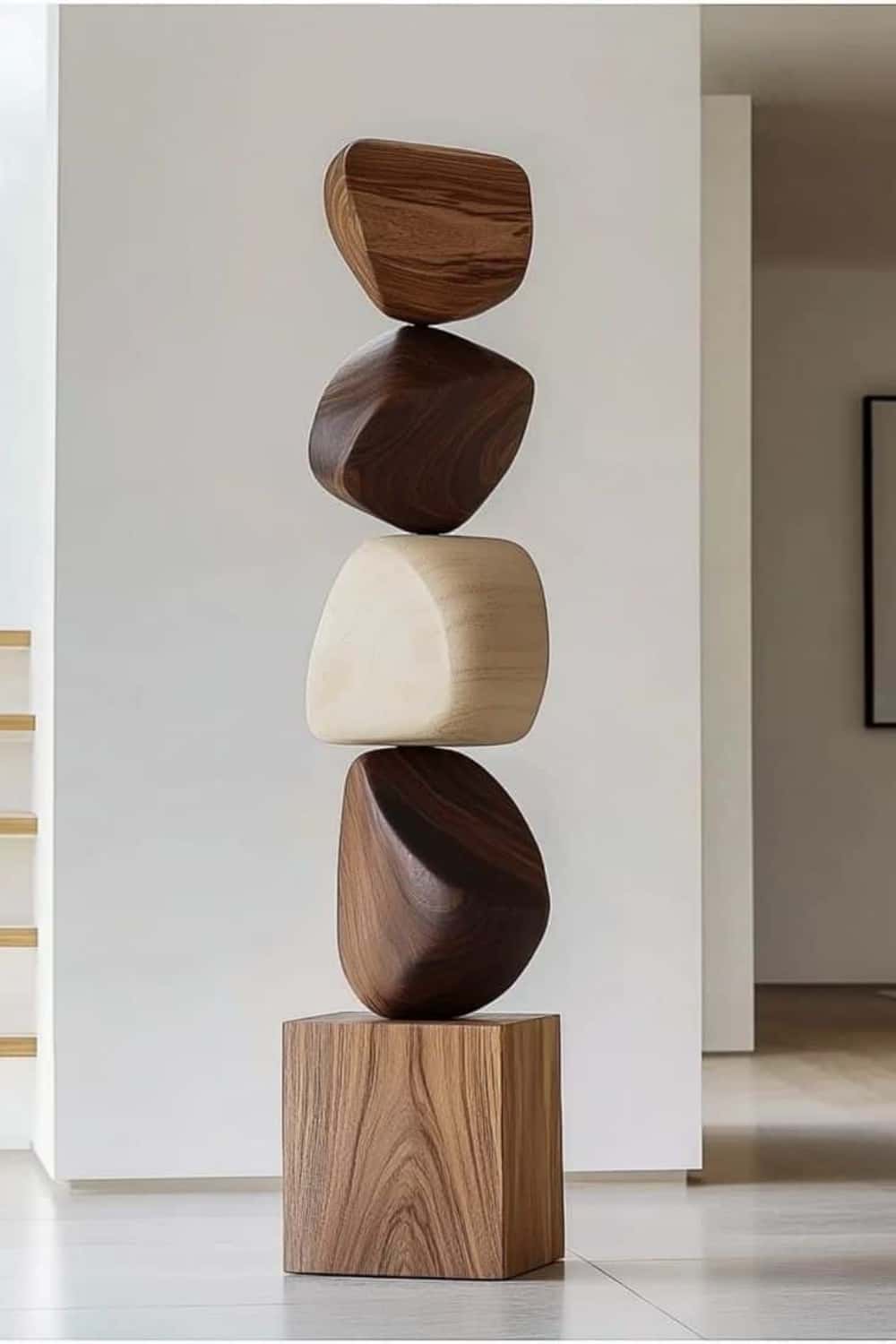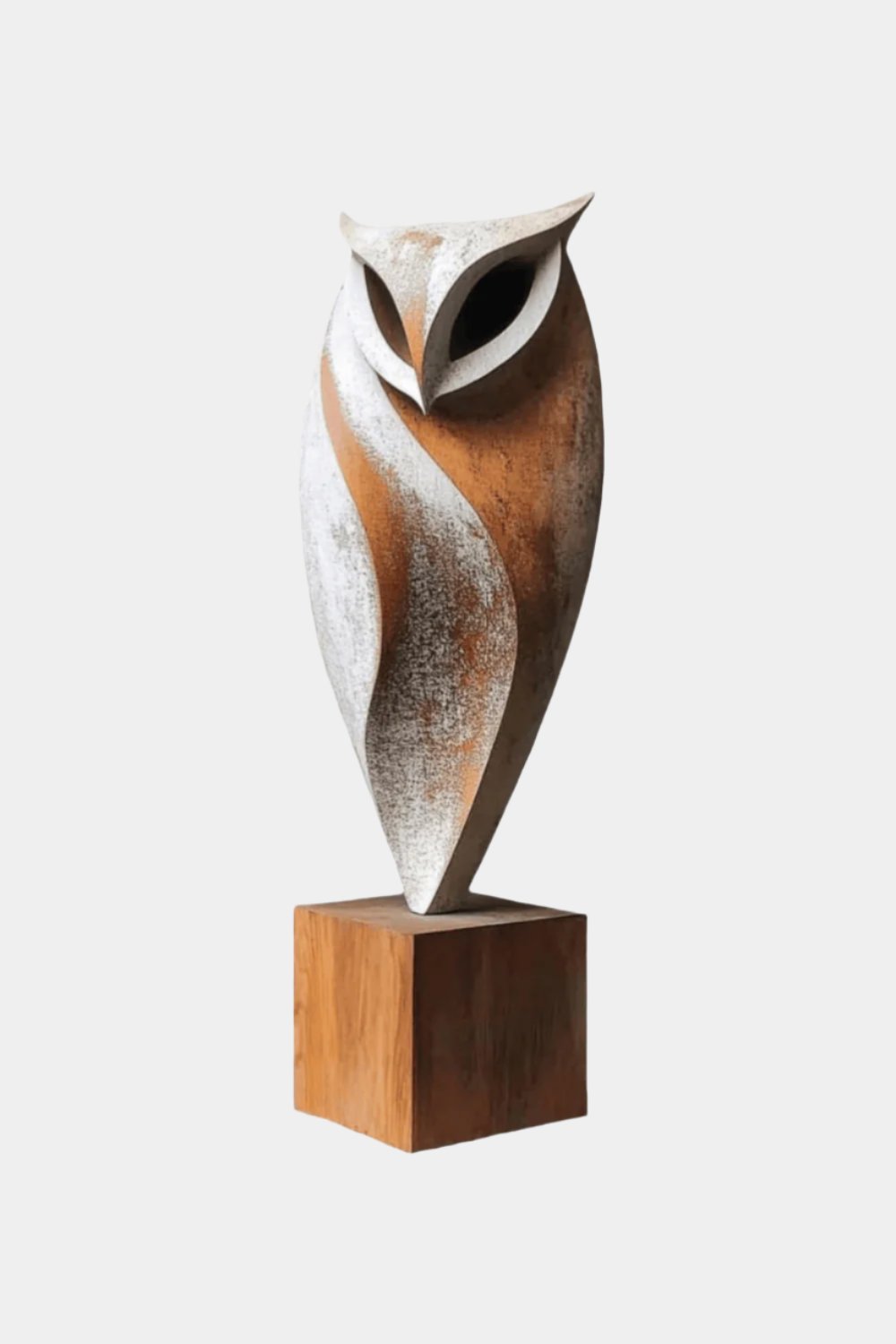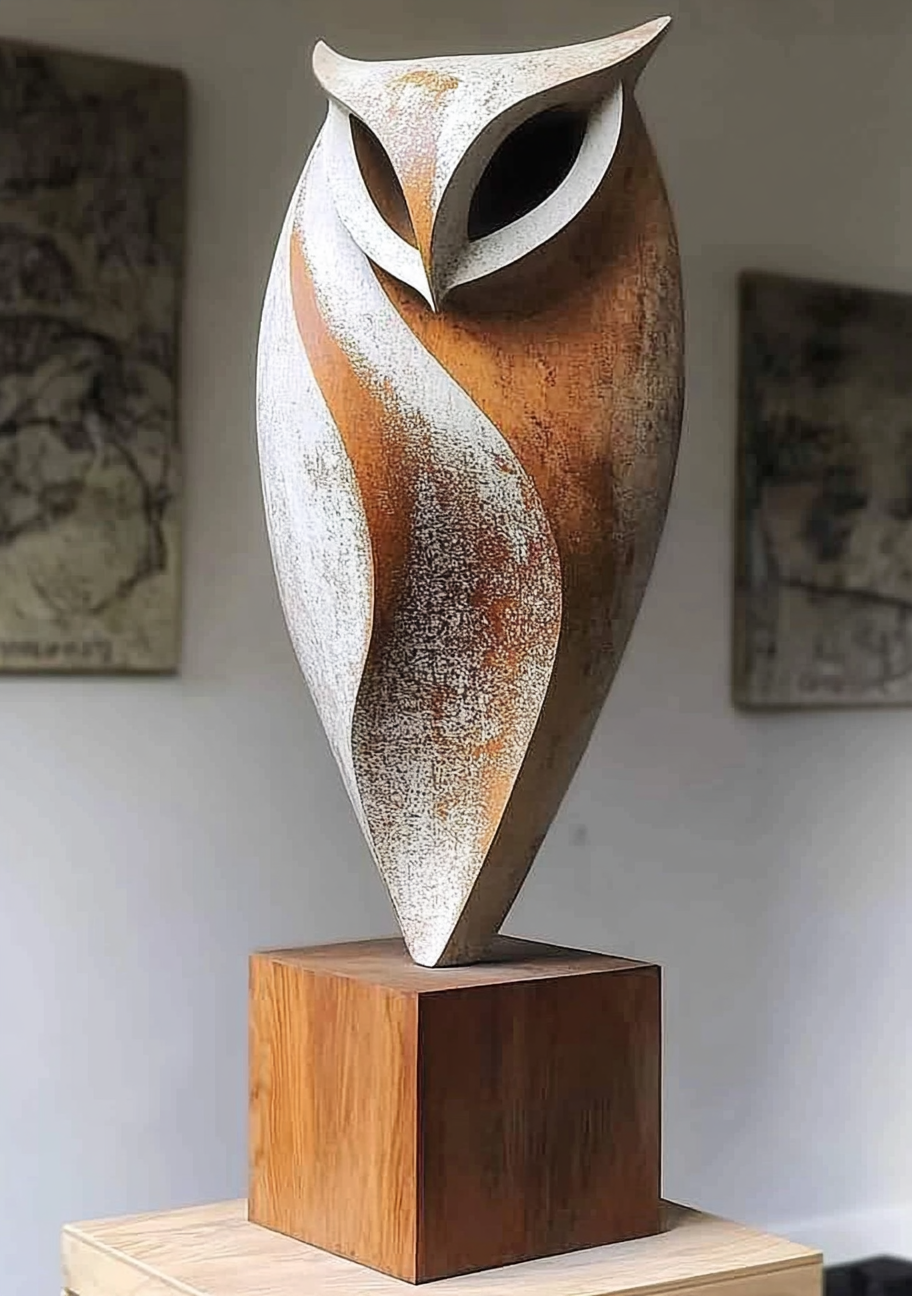




At Artiblend, we believe that the soul of a sculpture is not carved — it is revealed. Each piece already exists inside the wood; our craftsmen simply have the patience, skill, and respect to find it. What follows is an honest account of that journey: from the moment a log is chosen in the timber yard to the day a finished sculpture arrives at your door.
Material Sourcing
Selecting the Right Wood — Where Every Sculpture Begins
Long before a chisel is lifted, the most consequential decision has already been made: which piece of wood will become which sculpture. At Artiblend, we source exclusively from two responsible channels — riverbeds and reclaimed timbers, and timber from monitored, sustainably managed forests. This is not a marketing claim; it is the foundation of every design decision we make.
Riverbed timber — wood that has spent years submerged or carried downstream — possesses a character that no sawmill can replicate. The water smooths certain surfaces, concentrates natural oils in the grain, and often creates extraordinary patterns of erosion and mineral staining. When our scouts walk a riverbed, they are reading the wood the way a jeweller reads a rough diamond: looking for hidden brilliance.
Our craftsmen reject more timber than they accept. A piece with the wrong grain direction for the intended form, or a crack running through a structural zone, is passed over — however beautiful the surface might appear. The selection process can take days. We consider it part of the sculpture.
Preparation
Seasoning & Conditioning — Teaching Wood to Be Still
Raw timber is alive with movement. As it dries, it shrinks, twists, and checks (develops surface cracks). A sculpture carved from improperly seasoned wood will inevitably crack, warp, or open along the joints — sometimes months after it has been sold. This is why Artiblend refuses to rush the drying process.
Our pieces go through two phases of conditioning: outdoor air-drying under covered racks where wind and shade do the slow work, followed by controlled-environment kiln seasoning to bring moisture content down to the precise range at which the wood is stable indoors — typically between 6% and 9%.
During this period, each log is inspected and turned regularly. Hairline surface checks are monitored; any timber that develops a deep structural crack is redirected to smaller sculptural forms rather than forced into a design it cannot support. The wood tells us what it is capable of, and we listen.
Design
Reading the Wood — Finding the Form Inside
Before any tool touches the prepared timber, the sculptor studies it. This is not a brief inspection; it can be a session of hours, even spread across several days. The craftsman turns the piece, holds it under different lights, traces the grain with fingertips, and looks for what the wood is already suggesting.
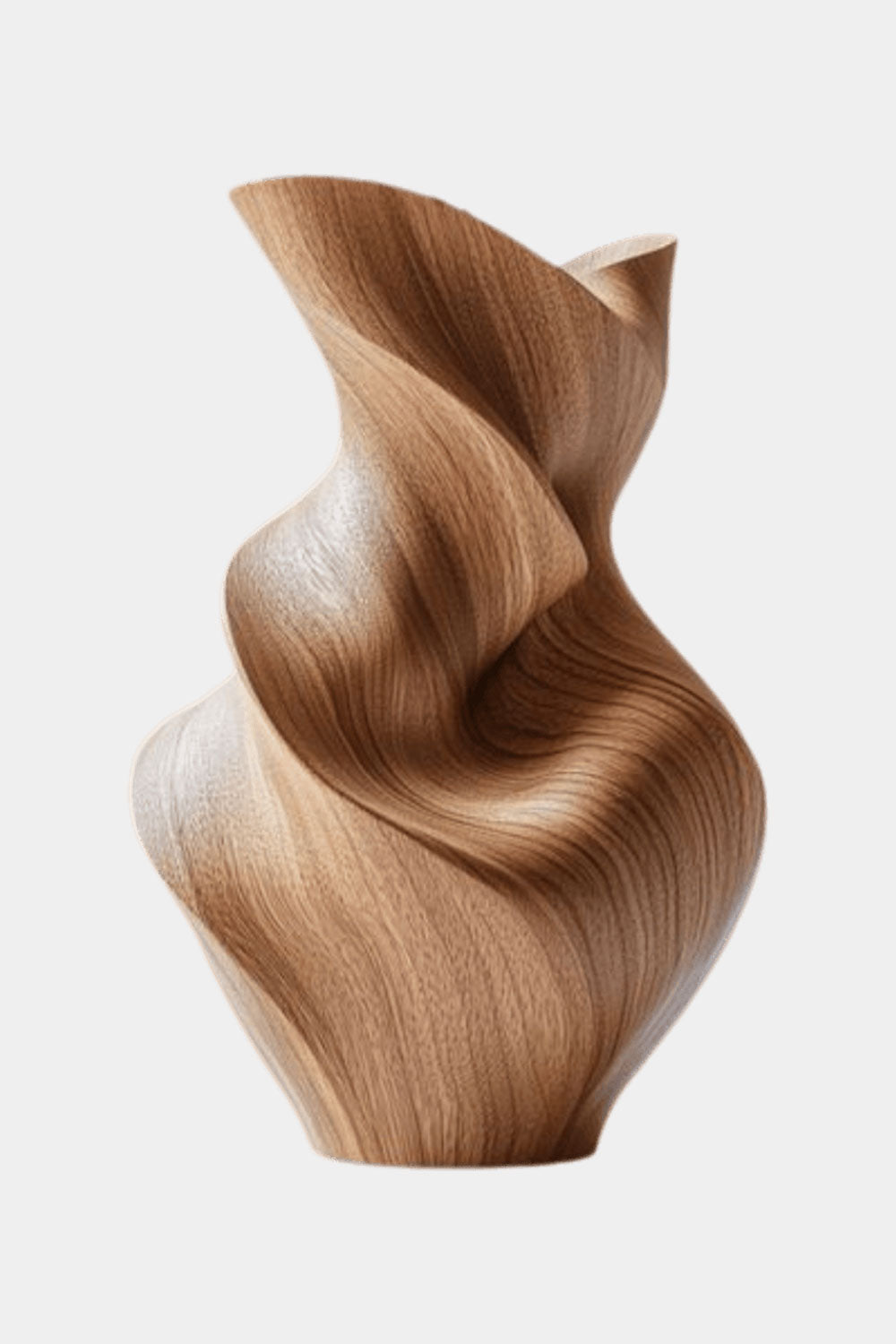
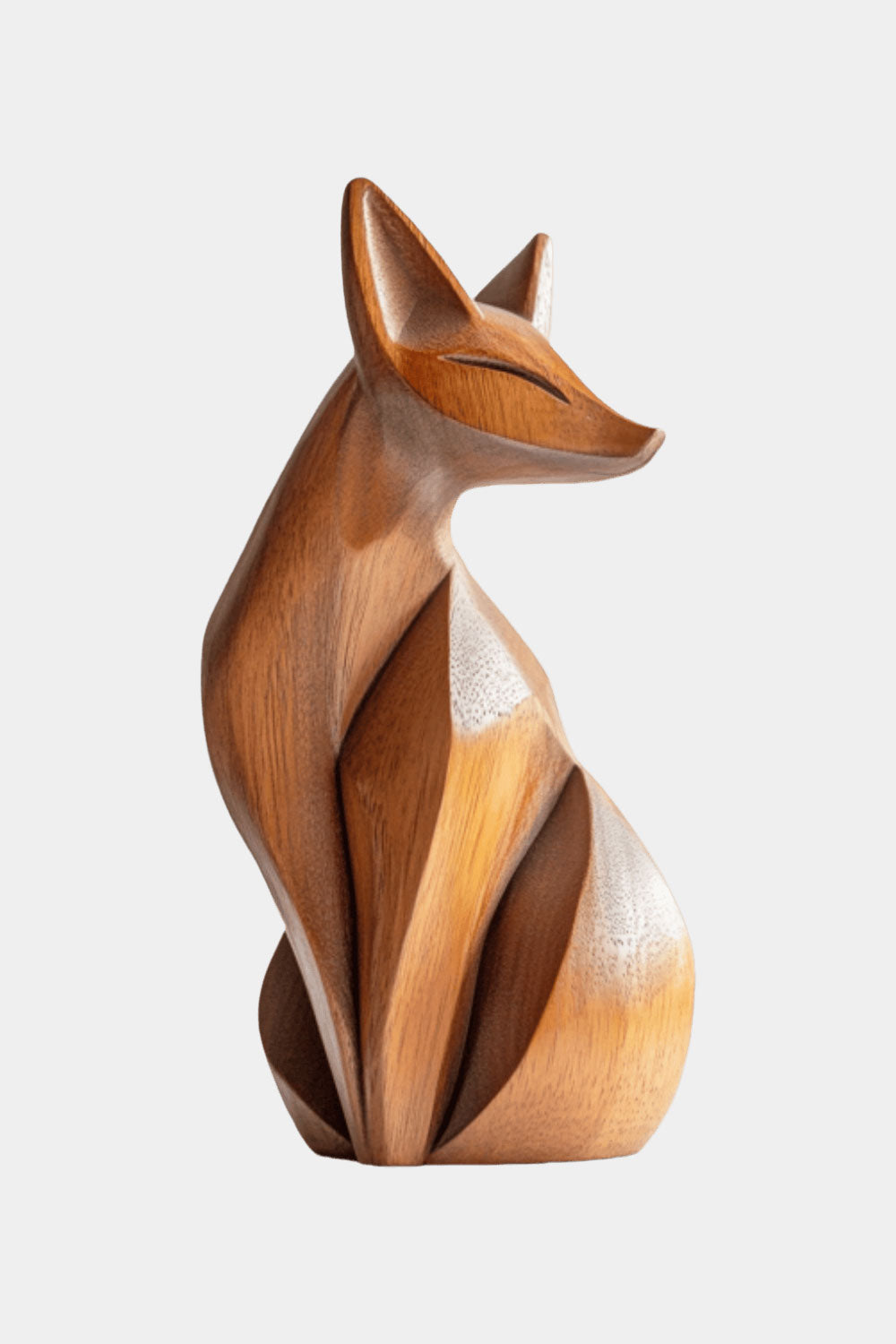
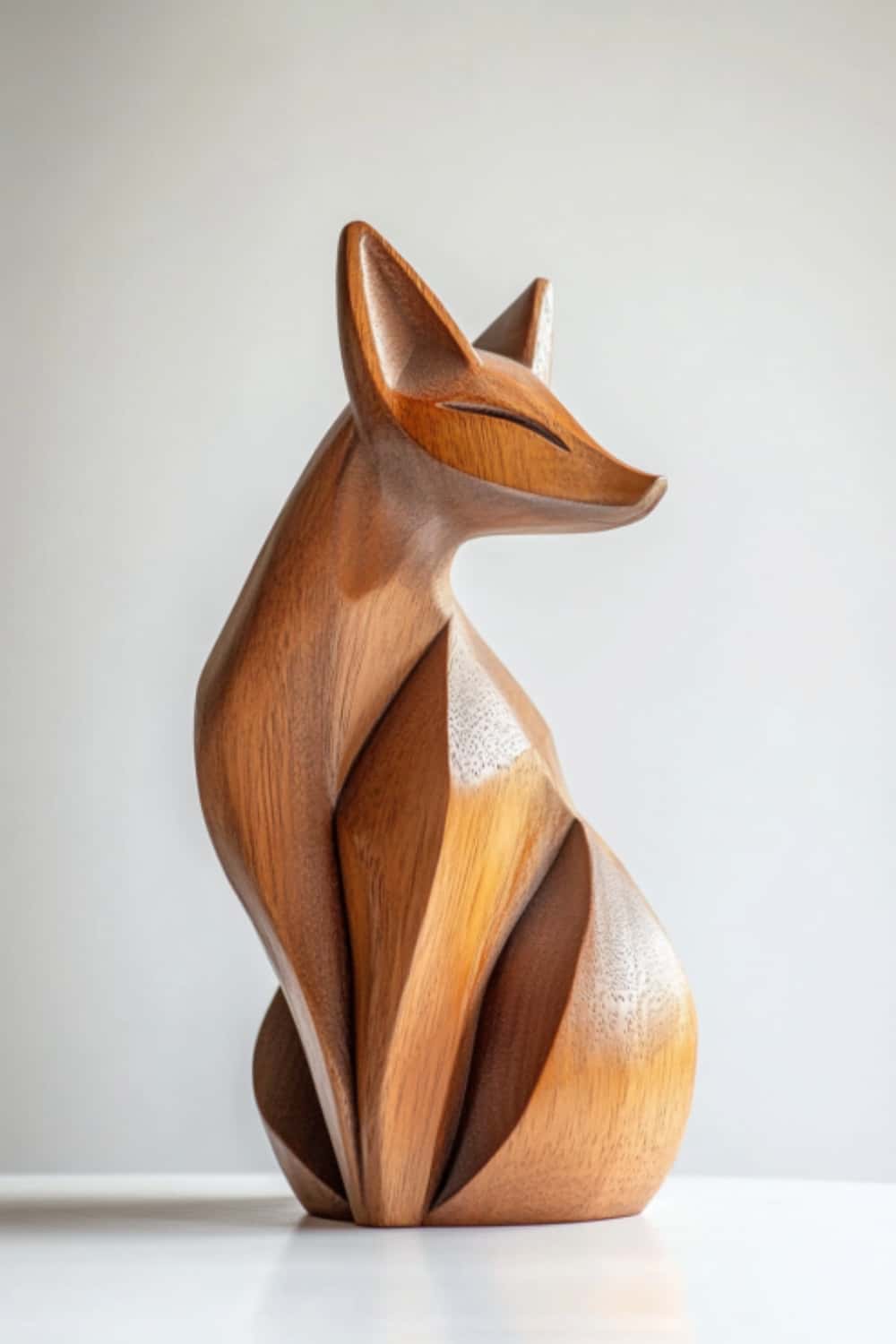
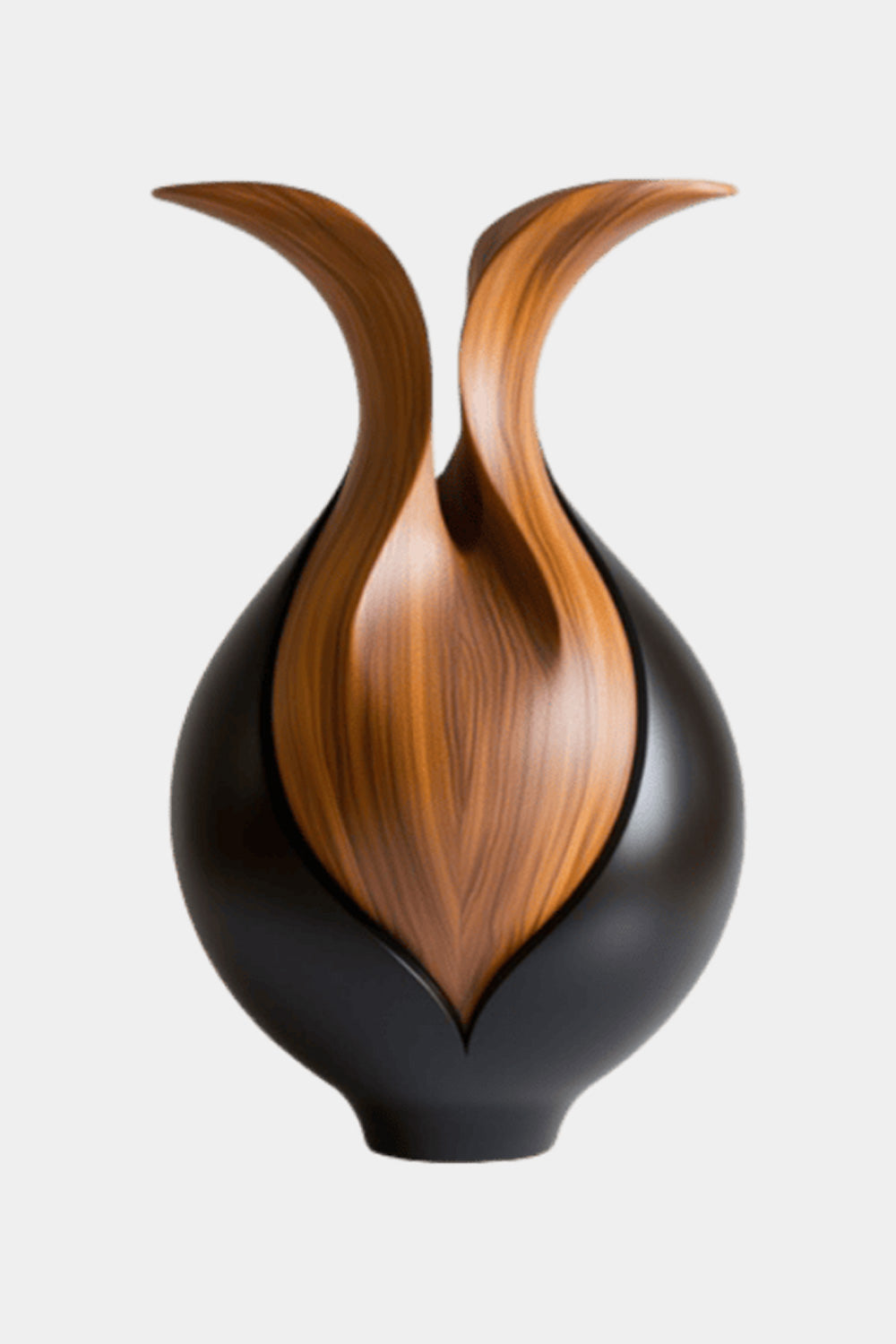
At Artiblend, we believe design is a conversation, not a command. A block of walnut with a sweeping diagonal figure might become a diving fox — because the grain already moves that way. A piece of oak with a dramatic live edge might become a vase, its natural rim preserved exactly as the tree grew it. Forcing a predetermined shape onto wood that resists it produces work that looks forced; working with the grain produces sculpture that looks inevitable.
Only once the form is agreed — often sketched onto the wood itself with chalk — does the carving begin. Even then, the design is not fixed. The wood retains the right to change the plan.
Carving
From Block to Form — The Carving Process
The carving of an Artiblend sculpture proceeds through three distinct phases, each requiring different tools and a different quality of attention.
Roughing Out
Large-format gouges, mallets, and occasionally a chainsaw or angle grinder are used to remove the bulk of excess material and establish the primary masses of the sculpture. Speed matters here; the goal is to get close to the form quickly, before the wood reacts to moisture changes from being opened up.
Secondary Carving
With the major forms established, medium chisels and curved gouges define planes, transitions, and anatomical details. This is where an animal sculpture gains its posture, where a vase form finds its proportions. This phase can take days on a complex piece.
Detail Work & Refinement
Fine-point knives, rifflers, and small V-tools add feather texture, fur direction, facial expression, and surface flow. The sculptor works across the entire piece simultaneously, stepping back constantly to assess the relationship between all elements. Nothing is finished until everything is finished.
Throughout carving, the craftsman is in continuous dialogue with the grain. If an unexpected figure emerges — a burst of bird's-eye patterning, a hidden spalting line from years of mineral contact — the design adapts to include it rather than cut through it. These moments of discovery are what make every Artiblend sculpture genuinely unrepeatable.
Surface Treatment
Sanding & Smoothing — The Conversation With Light
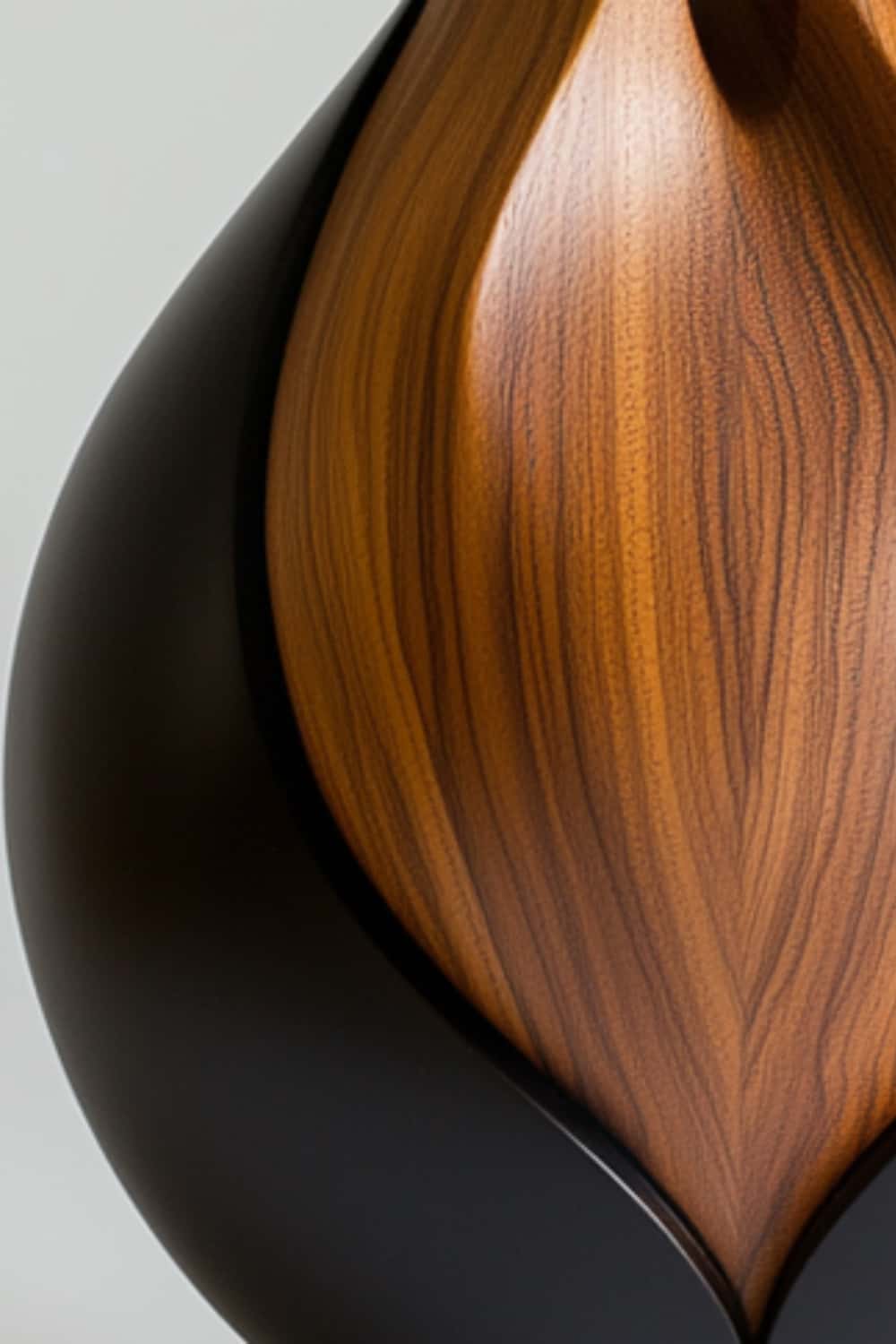
Sanding is one of the most underestimated stages of wood sculpture. It is not simply the removal of tool marks; it is the progressive refinement of how light moves across a surface. Each grit level — from the coarse 80-grit that removes the deepest chisel facets, through 120, 180, 240, and sometimes as fine as 400 — changes the way the wood reads visually and physically.
At Artiblend, we do not sand all surfaces to the same finish. Convex, flowing forms — the back of a fox, the flank of a horse — are sanded smooth to invite touch and reflect light warmly. Recessed areas and textured passages — carved feathers, rough bark sections, deliberately tool-marked planes — may be left at an earlier stage to provide contrast and visual depth. This interplay between rough and smooth is a deliberate aesthetic choice, part of our distinct, streamlined aesthetic.
Between sanding stages, the wood is dampened with a clean cloth and allowed to dry. This raises the grain slightly, allowing finer grits to cut it back to a truly smooth finish — a technique that produces surfaces that feel almost liquid under the hand.
Finishing
Oils, Waxes & Protection — Sealing in the Story
The finishing process at Artiblend is designed to do two things simultaneously: protect the wood for decades of indoor life, and make the wood look like itself — only more so. We avoid heavy lacquers and polyurethane coatings that create a plastic barrier between viewer and material. Our preferred finishes are penetrating oils and hand-applied waxes that sink into the wood fibre and cure from within.
For most pieces, the process is: two or three coats of raw linseed or tung oil, applied by hand with a cloth, each coat given 24–48 hours to penetrate and cure before the next. Once the oil has fully hardened, a finishing wax — often carnauba-based — is buffed in and brought to a soft, satin sheen.
Dark-toned sculptures may receive a careful application of ebonising agents or iron-based finishes to deepen and unify the colour. Natural-tone pieces are allowed to speak for themselves. Across all finishes, the objective is permanence: a sculpture that will look better in ten years than it does today.
Quality Review
The Final Inspection — No Shortcuts, No Exceptions
Before any Artiblend sculpture is photographed, packaged, or dispatched, it passes through a final quality inspection — not a checklist, but a studied evaluation by a senior craftsman who was not involved in making the piece. A fresh eye, it turns out, catches things a familiar eye overlooks.
The inspector checks structural integrity (no concealed cracks, no unstable joinery), surface consistency (no missed sanding steps, no uneven finish application), finish curing (the oil must be completely dry — tacky pieces are returned to the studio for further curing), and aesthetic coherence (does the piece read well from all principal viewing angles?).
Any piece that does not pass is returned — not to the reject pile, but to the sculptor. Most issues are correctable; a piece is only retired if a structural problem renders it unsafe or if a finishing flaw cannot be resolved without compromising the carving beneath. Our internal rejection rate is something we track carefully and consider a measure of our standards.
Delivery
Packaging & Delivery — Protecting What Took Years to Make
The journey from studio to door is the final act of craftsmanship. Each finished sculpture is photographed from multiple angles before packaging — partly for our own archive, partly because we believe our customers should know exactly what they are receiving.
Packaging uses custom-cut foam inserts designed for each sculptural form, wrapped in unbleached tissue and placed in a double-walled carton sized to fit — not the nearest standard box. For international shipments, additional corner and edge protection is added. We do not dispatch a sculpture until we are confident it will arrive in the same condition it left.
True to our commitment, delivery only happens once the customer is satisfied. Every piece is backed by our full satisfaction guarantee, and our 24/7 customer service team is available globally to assist with any questions about care, placement, or customisation. When your sculpture arrives, it arrives as a complete work of art — one that carries in its grain the memory of a riverbed, the patience of years of drying, and the attention of hands that knew what they were making.
A Note on Uniqueness
The process described here — from months of timber selection through weeks of carving and finishing — is why no two Artiblend sculptures are identical, and why that is not a compromise but a point of pride. Mass production would allow us to make more pieces. It would not allow us to make these pieces.
Every knot, every swirl of grain, every slight asymmetry in a carved ear or a flowing live edge is the record of a specific tree, grown in a specific place, over a specific number of years. When you own an Artiblend sculpture, you own that record. You own a piece of time.
Ready to Bring One Home?
Browse our full collection of handmade wooden sculptures — each with its own story, grain, and soul.
Explore the Collection